
The route decides the construction. This is a short guide to matching 0.6/1kV cable to the way it will actually be installed, rather than to the way the drawing assumes.
Direct burial without a duct
This is the clearest case for armour. Steel tape armoured cable with a PE sheath is the standard answer: the tape resists impact and rodent attack, and PE tolerates permanent soil moisture.
Bury at the depth required by local regulation, bed in sand, and place warning tape above the cable. Record the route — the armour protects against shovels, not excavators.
Ducts and cable trenches
Inside a duct the cable is protected from soil and impact, so unarmoured cable is often sufficient. The limiting factor becomes pulling tension and bend radius, especially on long runs with multiple bends.
In shared trenches that will be opened again, armour is worth the cost: the risk is not the soil but the next contractor.
Trays, ladders and indoor routes
Unarmoured cable is normal indoors. What matters instead is the sheath: PVC for dry areas, LSZH where the fire strategy requires it, and mechanical protection at floor crossings and wall penetrations.
Support spacing and fill ratio should follow the tray manufacturer and the installation standard; over-filled trays reduce the current rating of every cable in them.
Vertical risers
Weight becomes the governing load. Steel wire armour carries the cable’s own weight and is specified for long vertical runs; steel tape provides radial protection but little tensile strength.
Cleats must be designed for the vertical load and must not crush the sheath. On very long risers, check whether a supporting wire or intermediate joint is the better solution.
What armour costs, and when it pays
Armoured cable typically carries a 15–30 % premium over the equivalent unarmoured construction, plus larger bend radii, heavier drums and slower installation.
It pays back in routes where an unarmoured cable would need a duct, a concrete surround or a steel channel. Compare the installed cost of the whole route, not the price per metre of the cable.
Request datasheet & price
Send the project specification and we will confirm construction, standard and delivery schedule. Samples for approval can be arranged.
Get a Quote WhatsApp UsRelated reading
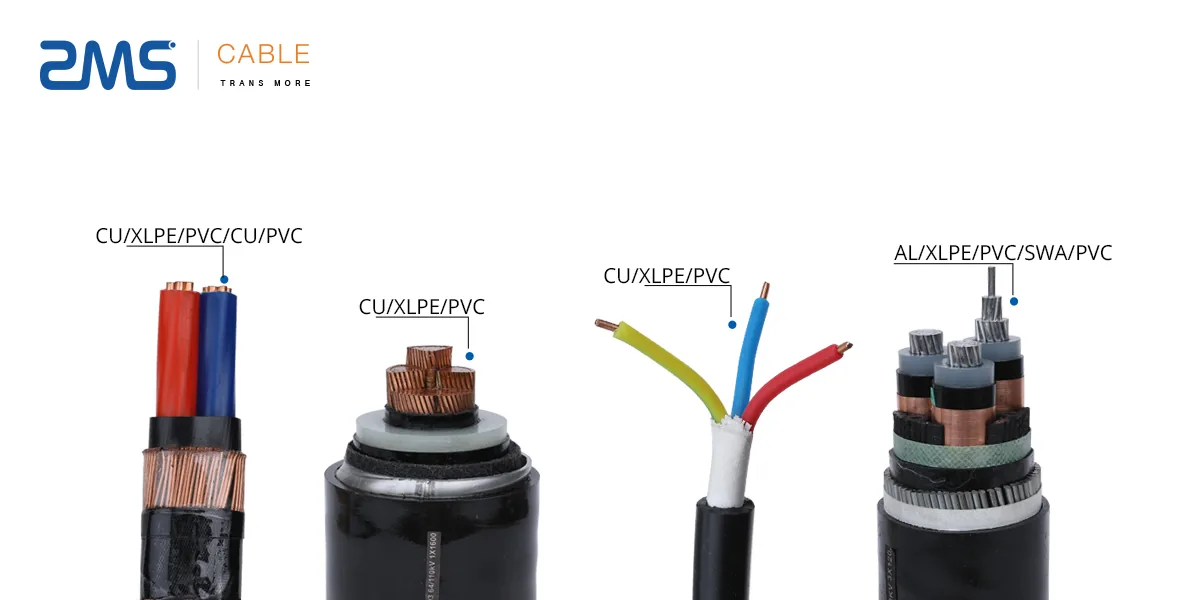
How to Specify Low Voltage Power Cable for an Industrial Project
A practical six-step method for specifying 0.6/1kV power cable: voltage, load and derating, cores, conductor class, insulation and sheath, route protection.
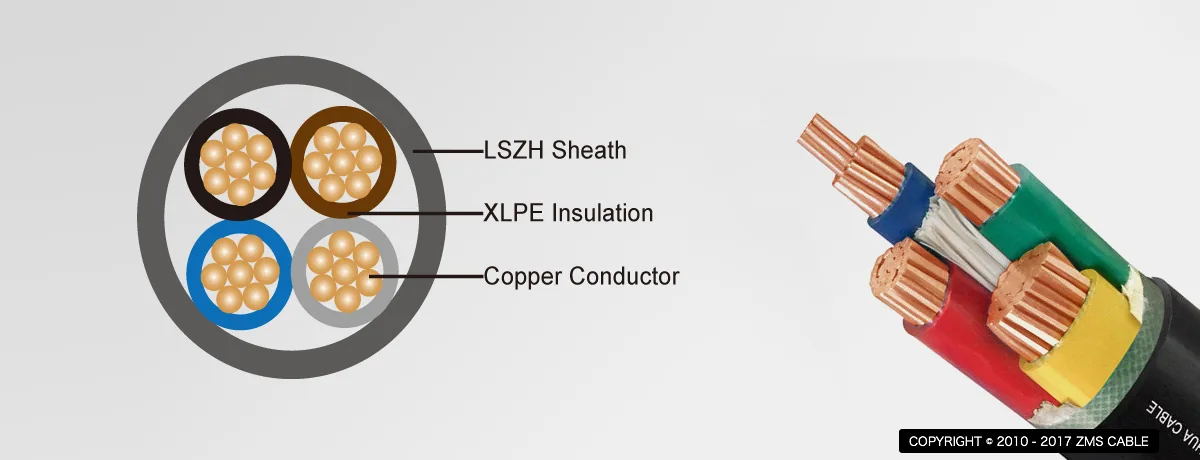
LSZH vs PVC Cable: What Actually Changes in a Fire
What LSZH and PVC cable actually do in a fire: smoke density to IEC 61034, halogen gas to IEC 60754, flame propagation to IEC 60332 and the cost trade-off.
Specifying cable for a project?
Send the schedule and the route description. We will confirm the construction and quote factory-direct.
The route decision maps directly to a construction. Direct burial and duct work takes the steel tape armoured LV cable; trays and indoor runs are usually served by the PVC / XLPE insulated LV power cable; vertical risers and moving applications take the flexible drag chain cable.